The ARG Exam (Rockies)
How to Prepare
You’ve applied, been accepted, screened successfully, finished your Guides Training Rock (GTR) course and now it’s time to buckle up and lock in for one of the most fun climbing summers of your life.
It’s not too often you get to have an incredibly focused summer of climbing, with a large variety of classic Rockies routes to “tick”, a wealth of knowledge and skills tucked in your back pocket, and about 11 other ‘candidates’ who are all keen to climb the same objectives!

It’s also important to note that when it’s all said and done, you should be enjoying yourself! Take this as a great learning opportunity. You’ll gain great insight not just into technical systems and climbing, but also about yourself; how you handle pressure, how you cope with positive & negative occurrences, and how you problem solve on the fly. So have fun!
My recommendation:
Everyone’s work/life situation is different so take this with a grain of salt. But in the grand scheme of things, one single summer is probably not going to make or break the major purchases in your life, or pivotal career moments. So, do yourself a favour and take some time off! Whatever you can. Think of the summer as being dedicated to completing your ARG exam successfully and put the time in.
For one, it’s just a really good time to have the summer “off” but have really focused objectives and a well-defined goal. Two, investment wise it’s worth front-loading your time now to have a successful exam, versus having to re-take the exam and thus needing more time off in the future.
How to Train Effectively
1. Get good at role playing
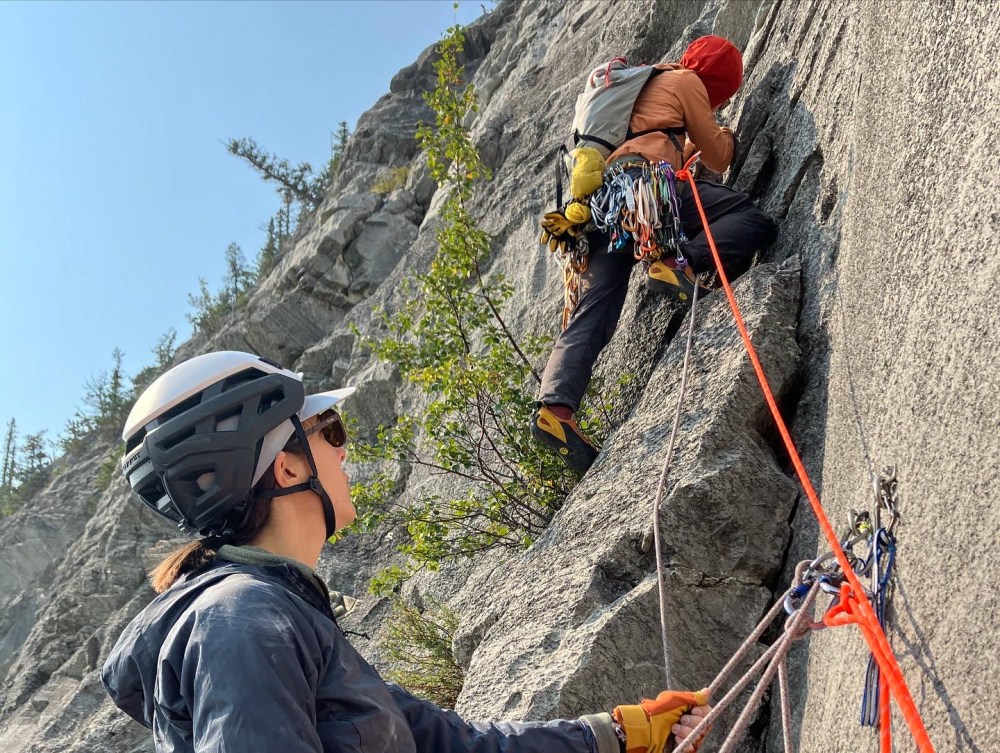
Before I go into the specifics, I found that the biggest benefit to my training was less about the objectives and more the quality of my training. This quality involves “buy in” from your partners, or role-playing. It requires your partners to act like “clients”, it requires you to coach them like clients, to explain systems, to “guide” them up a route.
This is easier said than done. You’ll find that other candidates from your GTR course are more apt to adopt this training style, whereas your buddies might find it pretty contrived (well, we all find it contrived!) But it’s worth putting the time in, because come exam time you’ll appreciate having taken it seriously.
I’m sure there will be many moments where you’re trying your best to “guide” your buddies up a route, but inevitably you’ll end up just saying “okay, guide mode off, let’s get the $&%# out of here”. Sometimes it makes sense, and sometimes it doesn’t. Just do your best to stick in the mode of coaching, protecting traverses (!!), short-roping exposed terrain, and sticking to proper systems (meaning, the fixed-point belay).
**A note on that – I’ll admit, I was pretty apprehensive about the fixed-point belay when I first learned it. I still have some misgivings about it, and there’s some applications I don’t think it’s my first choice. BUT, after a long summer of using it day-in and day-out you’ll likely find like me that’s it’s a really great system for multi-pitching and I’ve even adopted it in my personal climbing as well.
Technical Descents
This role playing extends to doing your technical descents. Yes, it’s definitely more efficient for your buddy and yourself to just rappel on your own, but having your stacked rappel systems dialed is another method of relieving stress from your exam. Practice coaching your ‘clients’, explaining the process and the potential length of the rappel, and explain how stacked rappels work.
Find a system that works for you and stick with it, be meticulous, and just repeat the same process every time. Some tips I found useful were:
- Building a common anchor (vs. a Quad, or Fixed-Point) with a girth-hitch master point. I found this simple to build, easily adjustable, and kept the station looking clean.
- Clip n’ flip all the “tie-in” carabiners connected to everyone’s tether – again, clean.
- Connect your prussik and pull slack through the rope
- ALWAYS do a full top down check before taking off
2. Climb as many routes as you can!
Now comes the fun part. Personally, I’m a list guy – I love staring down at a bunch of empty boxes, knowing that day-by-day I’ll slowly tick my way through and look back with gleeful pride and nostalgia. This is a perfect application for that.
Use your resources, chat with other candidates, chat with current guides, contact me here if you like – whatever it may be it shouldn’t be too difficult to come up with a solid list of routes that are likely to be used in an exam setting. These are “trade routes” and often get examined every year to keep consistency, just do a bit of homework!


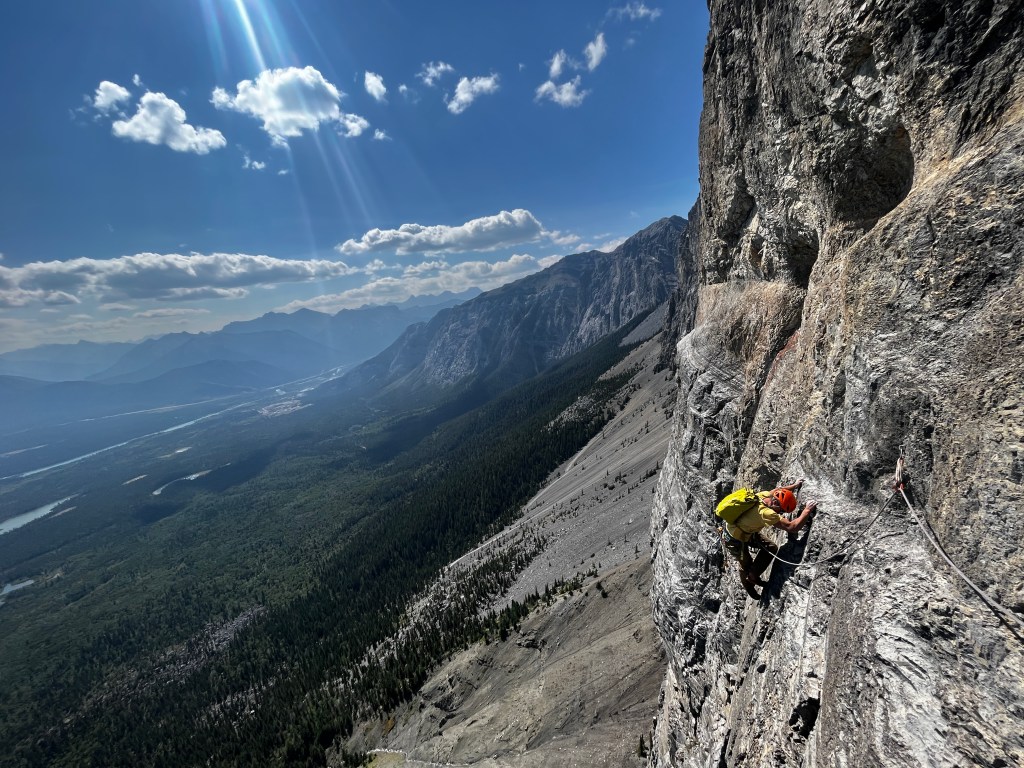
The list below is not exhaustive but these areas are all definitely worth investing a bit of your time into. Focus on routes that are more gear-intensive, moderate (5.6-5.10), and are likely “classics”. It’s important to remember that in the Rockies (as compared to Squamish) the routes tend to be easier ‘grade-wise’ but often the difficulties lie in the rock quality, route-finding, and approach & descent difficulties.
- Yamnuska
- Kid/Nanny Goat
- East End of Rundle (EEOR)
- Ha Ling
- Guide’s Rock
- Rundle Rock
- Tunnel Mountain
- Saddle Mountain
- K-Country (Mt. Kidd, Joy, etc.)
While a keen-bean can tackle multiple EEOR routes in a day, it’s likely in your best interest to complete 1-route per day and increase the total amount of days you can climb in a row. The exam itself is 6-days long (with the first day being geared towards rescue scenarios) so being able to confidently climb 5-days on is a skill you should certainly possess.
3. Practice your Rescue Scenarios
It’s pretty easy to leave your GTR course feeling quite dialed on your rescue scenarios and rope systems. However, these are expirable skills and you’re better off doing a few smaller scenarios’ throughout the summer than try to re-learn everything a few days before the exam. This is day 1 of the exam week and it’s an absolute ‘gimme’ if you’re dialed on it.
In a lot of ways there are cascading effects from the day 1 rescue scenarios. If you have a rocky start to your exam week it’s easy to let that stress bleed over into your multi-pitch days. You’ve heard the term spiraling, and it can be acute or gradual – either way it’s best to avoid it. Conversely, if you crush your rescue scenario (easily accomplished with practice) it sets you up for a really solid week and provides a nice confidence boost going in.

The skills needed are exactly what you’d have learned in the course:
- A lower: An Italian Hitch, Load Strand Direct, or ATC Guide release
- This will likely come with a knot pass so do yourself a favour and choose the easiest option for a knot pass…
- Load transfer (either baseline or extended NanoTraxion)
- A basic raise (3:1) + the ability to add more advantage (5:1)
- Load transfer
- A Counterbalance Lower
- Double rope ascension
- Tandem Rappel
4. Go Train With a Variety of Partners
This one is easy to say but harder to accomplish. We naturally build comfort with certain people and because of this we tend to trend to climbing with the same partners again and again. While this is certainly beneficial for safety & efficiency – it’s not as ideal in an exam setting. Try and get out with everyone from your course if possible. You’ll end up reducing personal stress on your exam day if you’ve built a small amount of rapport with each ‘candidate’ and you’ve essentially reduced an uncertainty in your day.
- The other benefit of climbing with all the other candidates in your course is determining who’s rack is good to go and who’s rack is a Frankenstein of different brands and non-coloured carabiners. This will be good to know come exam time.
Some of the most beneficial training days I had were with partners that had only a minor amount of climbing experience. Maybe they’ve climbed just a few times, or had never done a large multi-pitch, or climbed with traditional protection – whatever it is, will really benefit you. Coaching comes more naturally, you’ll tend to explain your systems clearly, and it’s really the most realistic training you could accomplish.



5. Train in inclement weather
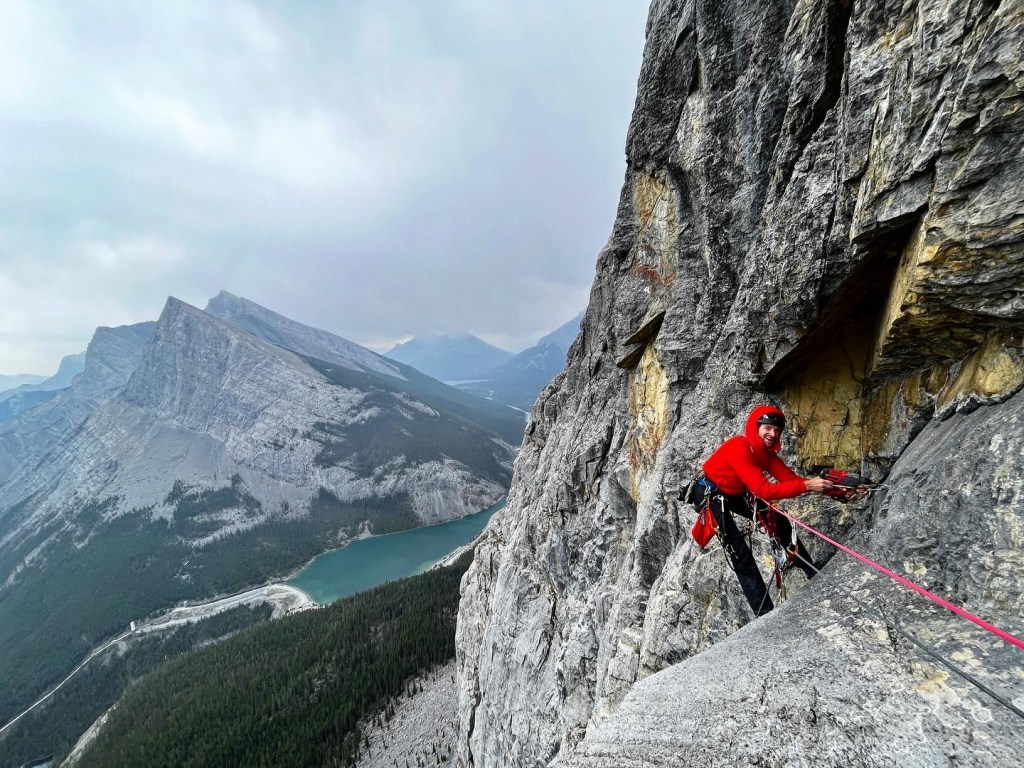
Your exam week is pretty locked in – so don’t expect major changes for inclement weather. It might be a tad bit rainy, cold, windy, or it could be splitter! Point is, it’s important to train in cold conditions, in damp conditions, in hot and sunny conditions (roasting on Yam is a key milestone of the ARG qualifications!)
- It’s also important when training to think every few pitches, “how would I bail from here?” Who knows what could happen on an exam (or guiding), you might be expected to bail from anywhere.
Exam Week
I don’t want to step on any toes here so I’ll likely keep my descriptions a little big vague, but overall I’d say that there are no surprises on the exam. It’s exactly what you should expect from your multi-pitch days on the course:
- A day of rescue scenarios (mentioned above)
- 5-days guiding as a 3 (2:1) or a 4 (1:1) with a few technical descents along the way
- 2:1 – You’ll lead about 1/2 the route and do 1/2 the tech descent likely
- 1:1 – You’ll be in two groups climbing right below each other, you’ll lead 1/3 of the route, spend some time leading another candidate, and lastly being a client to another candidate. (In any order)
- This is a leap frog-style: with the guide/examiner always following the front leader and everyone else will rotate every few pitches
- As the exam week progresses, what the examiners need to see from each candidate might change a bit so be ready to take over leads or tech descents unexpectedly.
- A debrief everyday (to discuss positives, negatives, learnables, and substandard marks)
- This is a leap frog-style: with the guide/examiner always following the front leader and everyone else will rotate every few pitches.
Tip #1
Do yourself a favour and take at least 2-rest days before your exam. Maybe spend one of them doing some systems practice, but the day leading up to your exam just chill. Drink some coffee, read a book, go for a meal with some friends, and get to bed nice and early.
Tip #2
The days can be long so meal-prepping before the exam week can be a big stress/time saver. I premade 6-burrito’s for dinner and froze them, I precut veggies and cheese to easily make my lunch wraps, I hit Costco and loaded up on granola bars, and I kept my breakfast routine exactly the same every day.
- The days can also be surprisingly short (ie. Done at 1400): Take this opportunity to recharge and enjoy the process
Tip #3
Sleep. Some days you meet at the parking lot for 0530, some days end up going later into the evening, whatever it might be you’ll make better decisions, have more energy, and simply be more equipped to handle stressful situations if you’ve slept, so prioritize it!
Tip #4
Be sure you like the rack between yourself and your partner is something you’re comfortable using. (eg. They’ve got a full set of DMM’s and you’ve only used C4’s, totems etc.) It can certainly add some unnecessary stress to use a rack your unfamiliar with.
Tip #5
Like water on a duck’s back, let negative occurrences be a learning moment, but then let it go. You can be a very competent individual, but it’s a dynamic environment out there and there’s likely going to be things that are less than optimal.
Tip #6
During the debrief don’t push back on substandard marks. Trust me, the instructors do a great job of eliminating bias as much as possible and discuss all the marks given as a group after the exam period. They assess if similar situations happened on other days, if multiple candidates did the same/different thing, and they will re-assign marks accordingly. So if you do get a substandard, feel free to ask questions and build a clear understanding, but don’t push back against it.
Tip #7
Have Fun! After all, you’re just out climbing for 5-days on classic multi-pitch routes in the Rockies. So soak it in, enjoy it, and as much as it’s an examination – it’s also a great learning process. Success or failure you’ll be a better climber/guide in the future an attitude of learning.
Marking
I’m not on the ACMG TAP committee, nor have I ever marked a candidate, so take this with a grain of salt. The marking criteria will be well-explained during your course so I won’t go into the nitty-gritty (nor should I).
However, as a baseline you need to get 7/10 in each marking category by the end of the exam. So if you get a substandard (6/10 say) on day 2, as long as you get an 8/10 or higher in that same category on another day then overall you’ll have a 7/10 by exam end. Simple.
There’s also consideration for progression during your exam process. So if you get some constructive feedback early on, be sure you take note, adapt and show that you’re taking the feedback and applying it.
I personally found the marking to be very fair. I did have marks changed between my exam end and final score – so that does happen. I also felt overall that if you did well in a category, that was scored accordingly… it wasn’t stingy.
In Closing
Above all else here just remember to enjoy the experience. It is what you make it. I mean, you paid to be here right? To learn, to have your skills assessed, and to receive constructive feedback to grow in your climbing/guiding career, so take it as the learning experience it is and you’ll have a much more palatable experience.
Sure the stress IS real, and there will be moments you’ve floundered, or made an error; recognize it, correct, and make note to make improvements the next time you encounter that situation. Keep your head up and remember that at the end of the day, we’re climbing right?!


 of Backpacks and Beards